Nutrition Evidence
Why India Removed Warning Labels on Fortified Foods for Thalassaemia and Sickle Cell Anaemia


Until recently, iron-fortified food packages in India carried this advisory:
"People with Thalassaemia may take it under medical supervision, and persons with Sickle Cell Anaemia are advised not to consume iron-fortified food products."
But in July 2024, the Food Safety and Standards Authority of India (FSSAI) removed this advisory. Why the change?
Fortified Foods Are Not the Real Concern
Are fortified foods safe for everyone? This question often arises, particularly in the context of inherited blood disorders like Thalassemia Major and Sickle Cell Anaemia.
Thalassemia Major is a condition in which the body cannot produce enough healthy red blood cells, requiring many individuals to undergo regular blood transfusions (donated blood is given to replace missing red blood cells).
Sickle Cell Anaemia, on the other hand, causes red blood cells to become hard and sickle-shaped, leading to pain and other serious health complications.
A common concern for people with these conditions is the risk of iron overload (too much iron in the body), primarily caused by frequent blood transfusions. Excess iron can damage vital organs, and many worry that consuming iron-fortified foods could add to this risk. However, the primary source of iron overload in these conditions is transfusion therapy, not foods like fortified wheat or rice. Here’s what the numbers say:
1 unit of blood transfusion = ~200–250 mg of iron
200–450 g of fortified wheat flour = ~7.9–15.8 mg of iron per day. That’s 16–32 times less iron than a single transfusion.
Tolerable Upper Limit (TUL) for iron intake = 40–45 mg/day
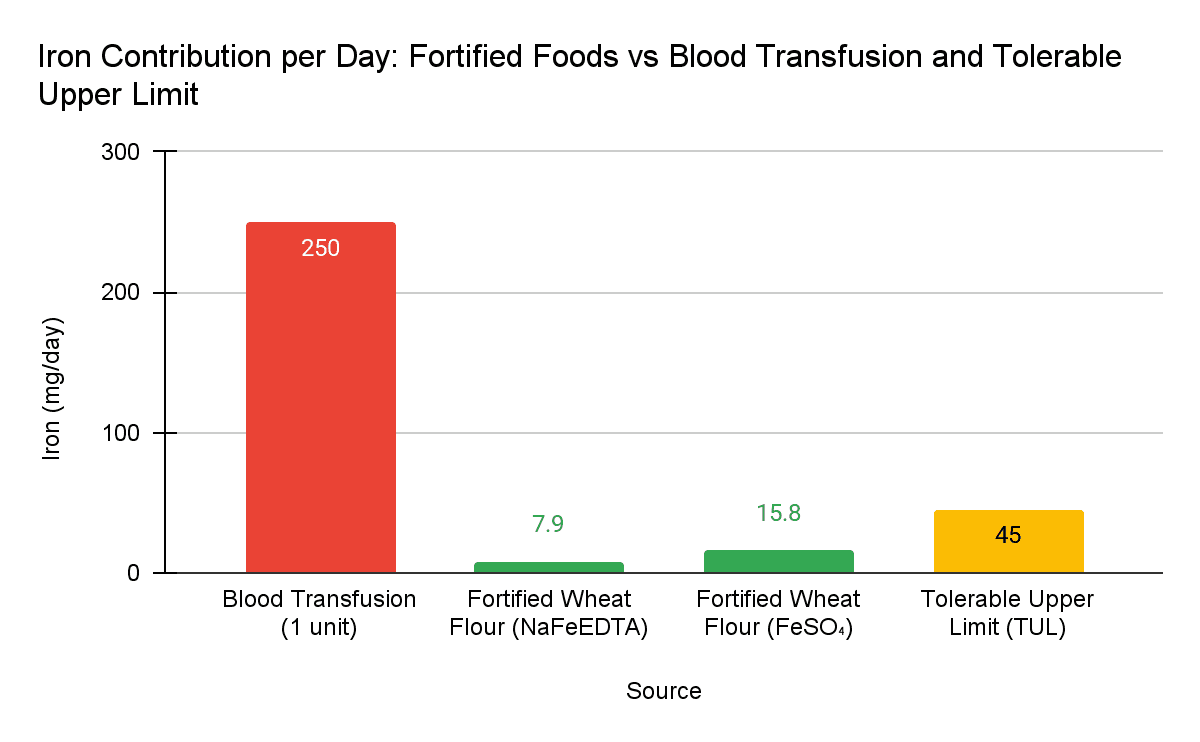
The main reason for iron overload in these conditions is regular blood transfusions, not food like fortified wheat or rice. The amount of iron from fortified wheat or rice is too small to significantly increase iron levels. Plus, the body has its own way of controlling how much iron it takes in from food, which makes the risk from daily meals even lower.
What Does Global Evidence Say?
Iron fortification is not new. It has been extensively studied by experts across the world and is recognised as a proven, cost-effective strategy to combat iron deficiency - the leading cause of anaemia globally. Globally, over 90 countries have adopted wheat or rice fortification to tackle iron deficiency and anaemia. The scientific consensus is clear:
There are no documented cases of iron overload caused by consuming fortified foods—even among people with blood disorders.
A study in Cambodia found that iron supplements improved anaemia in women with inherited blood disorders without causing harmful iron levels.
Countries like Brazil and South Africa have mandatory wheat fortification with no reported adverse effects for these populations.
In Ghana, fortified foods helped improve blood health even in children with the sickle cell trait.
Most individuals with these conditions receive targeted medical care based on their needs, and very few countries have special dietary restrictions in place. This reinforces global evidence that fortified foods, when part of a balanced diet and proper treatment, pose minimal risk—even for people with blood disorders.
Managing Iron Overload Through Clinical Care, Not Food Restrictions
Iron overload is a complex condition that cannot be managed by avoiding iron-rich foods alone. It requires consistent medical care. Doctors often prescribe iron chelation therapy, which uses medication to safely remove excess iron from the body. This is typically supported by other treatments such as folic acid supplementation, pain management, and, in some cases, bone marrow transplants—all of which help improve health outcomes and quality of life.
Screening programmes like prenatal tests and newborn checks help catch these conditions early. India’s Sickle Cell Anaemia Elimination Mission plays an important role in early detection. People screened for the condition are given colour-coded cards—blue for men, pink for women—indicating whether they are carriers or have the disease. These cards help healthcare workers provide targeted care and support couples in making informed decisions around marriage or pregnancy.
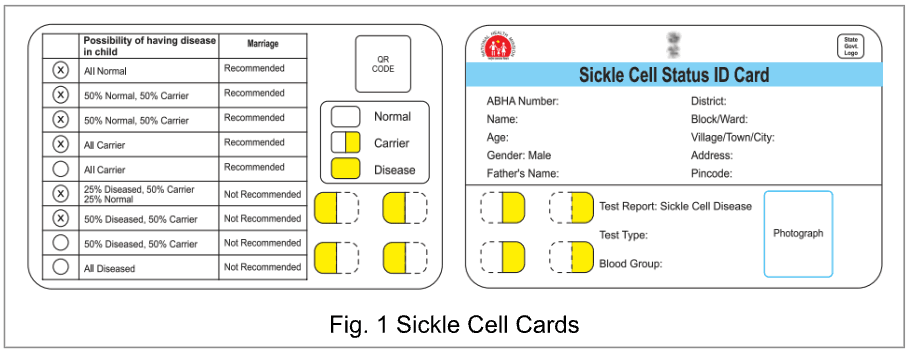
With early diagnosis, regular monitoring, and appropriate treatment, iron levels can be effectively controlled. Fortified foods, providing only a small fraction of daily iron needs, do not cause overload. Instead, they can support better nutrition in people with or without these conditions, when backed by the right care.
Removing Labels Helps Avoid Unwarranted Fear
Since 2021, iron-fortified food packages in India have carried warning labels advising individuals with Thalassaemia Major and Sickle Cell Anaemia to either avoid them or consume them only under medical supervision.
However, in July 2024, India’s food authority—the Food Safety and Standards Authority of India (FSSAI)—revoked this advisory. The decision followed a review conducted by a committee chaired by the Director General of the Indian Council of Medical Research (ICMR) and approved by the Ministry of Health and Family Welfare.
Evidence shows that the small quantity of iron added during food fortification does not pose a genuine risk of iron overload. Fortified foods help fill critical nutritional gaps and typically provide only a fraction (30–50%) of the recommended daily iron intake.
Removing these labels enables individuals to consume fortified foods without undue concern, while still emphasising the importance of medical care where required. It represents a shift towards science-based policy and improved public understanding.
The Way Forward
India’s removal of caution labels on iron-fortified foods reflects a growing consensus that, with stronger evidence, we can shift from broad warnings to informed decision-making. The way forward lies in the balance—not in blanket restrictions or blind reassurance, but in thoughtful action grounded in science, compassion, and care.
Tailored healthcare should remain the foundation for managing conditions like Thalassaemia Major and Sickle Cell Anaemia.
Clear, science-based communication can help reduce stigma and misinformation, particularly around fortified foods.
Ongoing research will continue to strengthen our understanding and support more inclusive and responsive nutrition strategies.
Fortified foods are a safe and effective tool to combat iron deficiency when supported by medical care and clear communication. Removing caution labels is a step toward more inclusive, evidence-based nutrition policies.
Related blog